
Finding Your Voice in a World That Wants You Quiet: Edie Arnold Is a Loser
Megan Rico and Kade Atwood’s coming-of-age feature film explores the tension between desire and reality, rebellion and discipline, and the identities we inherit versus the ones we choose.
Review by Al Hallak for Pitch to Screen
Some films take a little time to find their rhythm. Edie Arnold Is a Loser had me settled into its world within the first few minutes. There is an immediate sense of personality in the writing, performances, editing, and visual style, and the film knows how to keep that energy moving.
Written by Megan Rico and directed by Rico and Kade Atwood, the film is ultimately interested in a fairly simple question: what happens when the person you want to be does not fit the person everyone else expects you to be?
Edie Arnold, played by Adi Madden Cabrera, knows what she wants. From the beginning, she wants music, performance, and the freedom to express herself. Her desire to be in a band puts her directly against the expectations surrounding her life in a Catholic-school environment. Cabrera does a particularly good job with that contradiction. Edie is rebellious, but she is not simply written as a rebellious teenager. She has vulnerabilities, attractions, contradictions, and moments where her own desires collide with what she thinks she should want.
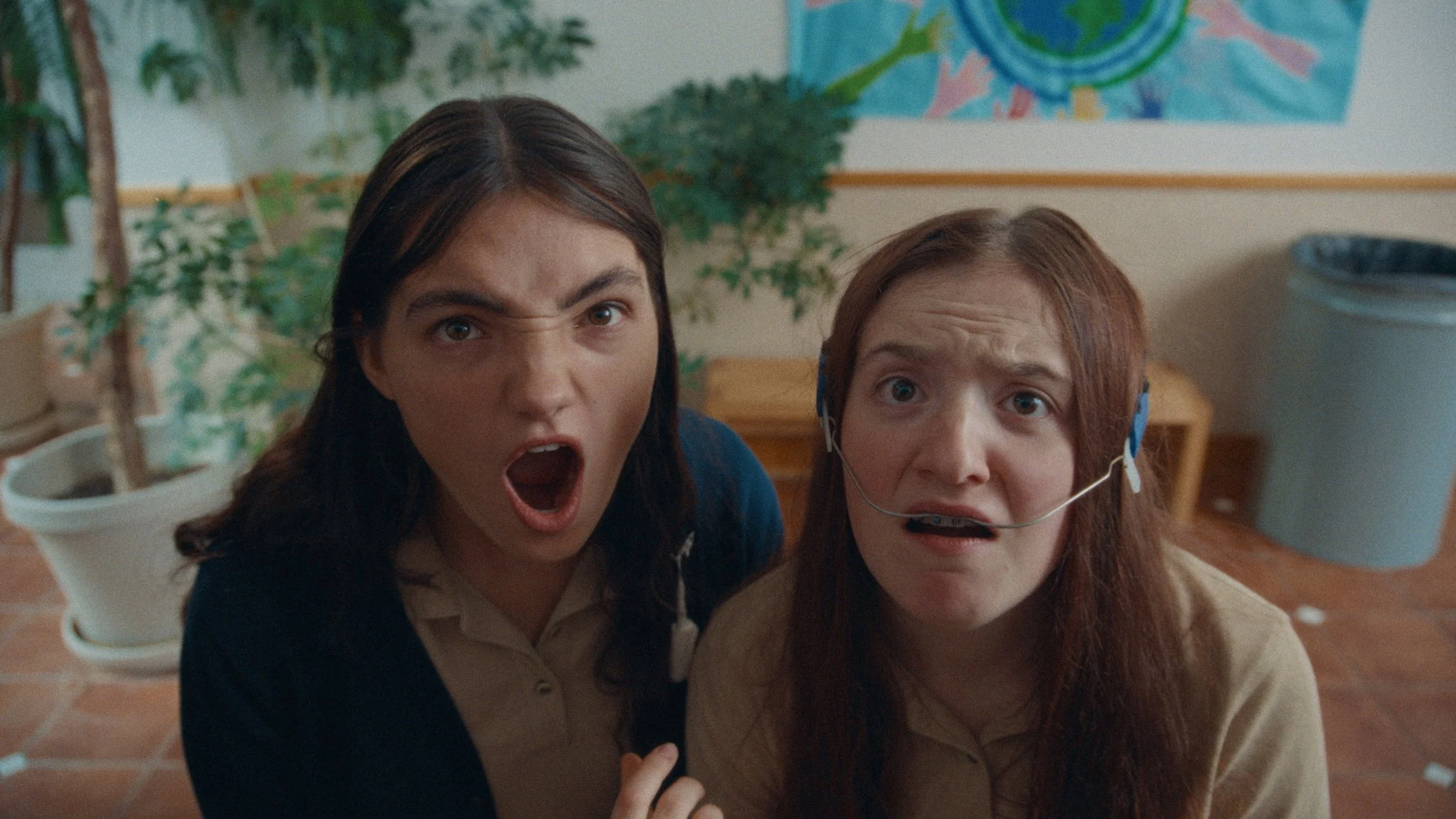
(L-R) Adi Madden Cabrera as Edie Arnold and McKenna Tuckett as Frances. Courtesy of Infigo Films.
One of the film’s interesting contradictions comes through Walter Boyd, played by Lucas Van Orden. Edie wants to break away from the expectations around her, yet she finds herself drawn to the kind of boy who seems, at least on the surface, to represent those very expectations. Walter is handsome, religious, and close to the image her mother and the world around her would approve of. But how well do we really know the people who appear to fit the image we expect them to? The film uses their relationship to question where rebellion ends and conformity begins, and whether the two are really as far apart as they seem.
That idea extends to the other characters. Kati Vidal, played by Alana Mei Kern, is particularly revealing in the way she thinks about appearance. Her comments about her looks expose how much value can be placed on the outer shell we present to other people. For Kati, appearance becomes a kind of gateway to acceptance and success, and her conflict with Edie makes that even more apparent. Edie is fighting to express what is inside her, while Kati is focused on making the outside acceptable. In different ways, they are both searching for the same thing: a place where they feel they belong.
Luanne Arnold, Edie’s mother, played by Cherish Rodriguez, brings another generation into that conflict. Her character carries cultural, religious, and generational expectations that have existed long before Edie. Rodriguez gives Luanne a sense of someone trying to protect a particular idea of how life should work while also confronting her daughter’s hopes and dreams. There is a genuine transformation in the character, and it gives the mother-daughter relationship more weight than a simple conflict between a strict parent and a rebellious child.
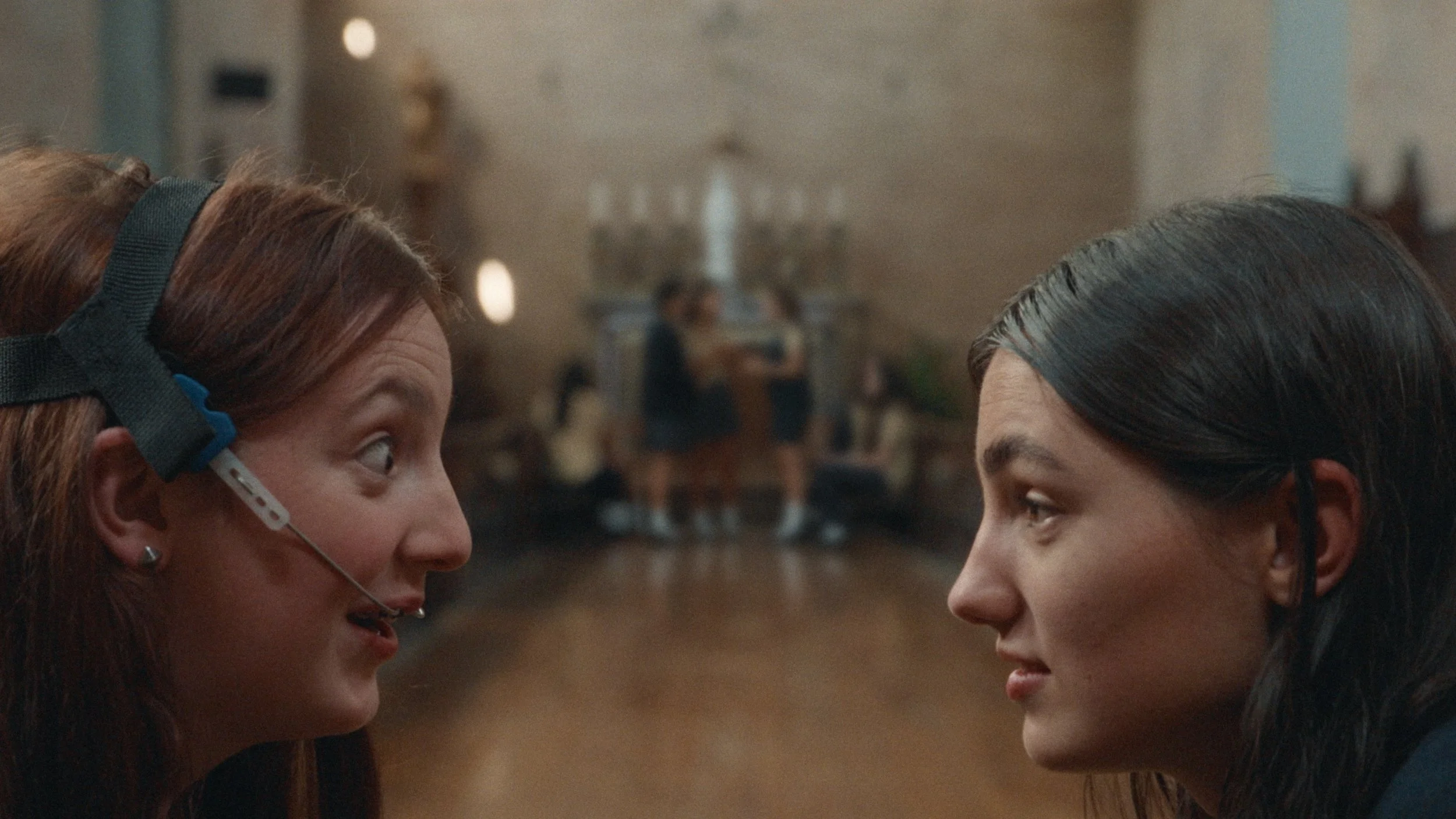
(R-L) Adi Madden Cabrera as Edie Arnold and McKenna Tuckett as Frances. Courtesy of Infigo Films.
McKenna Tuckett also makes a strong impression as Frances, a character who remains present throughout much of Edie’s journey. Tuckett brings a natural confidence and distinct personality to the role, making Frances feel like a fully realized character rather than simply someone passing through Edie’s story. Gabe Root’s Iggy offers another contrast. He feels like the most naturally authentic person in the group, someone who simply does what he wants without constructing an outer shell to satisfy everyone around him. Put together, these characters create a small world where almost everyone is negotiating the difference between who they are and who they think they need to be.
That is where Megan Rico’s screenplay works particularly well. The film is not trying to turn every character into a symbol, but their different personalities naturally reflect the larger question of desire versus reality. What we believe about ourselves does not always match what we want, and what we want does not always fit the role that has been prepared for us.

Behind the scenes of Edie Arnold Is a Loser. Courtesy of Brenna Empey and Infigo Films.
The film’s treatment of its Catholic-school environment is also more than it might initially appear. Edie Arnold Is a Loser exposes the restrictions and contradictions within that world, but it does not turn them into a simple argument. The film allows the audience to see the tension without telling us exactly what conclusion we are supposed to reach.
The filmmaking matches that approach. Rico and Atwood have a clear visual and editorial vision, and the film rarely calls attention to the machinery behind it. Brenna Empey’s cinematography is especially effective when the camera has to keep up with the characters. The lighting and composition give the film a polished look without taking away from its personality.
Steven Rico’s editing deserves similar credit. The rhythm feels natural, and the film moves between its different characters and situations seamlessly. It is the kind of editing that works because you are not thinking about the cuts. You are simply moving with the story.
The high production value is a testament to Bryson Alejandro’s hard work as a producer, making this ambitious film possible. Costume designer Amelia Kuhlmann adds another important layer, creating a visual contrast between the different worlds and personalities within the story.
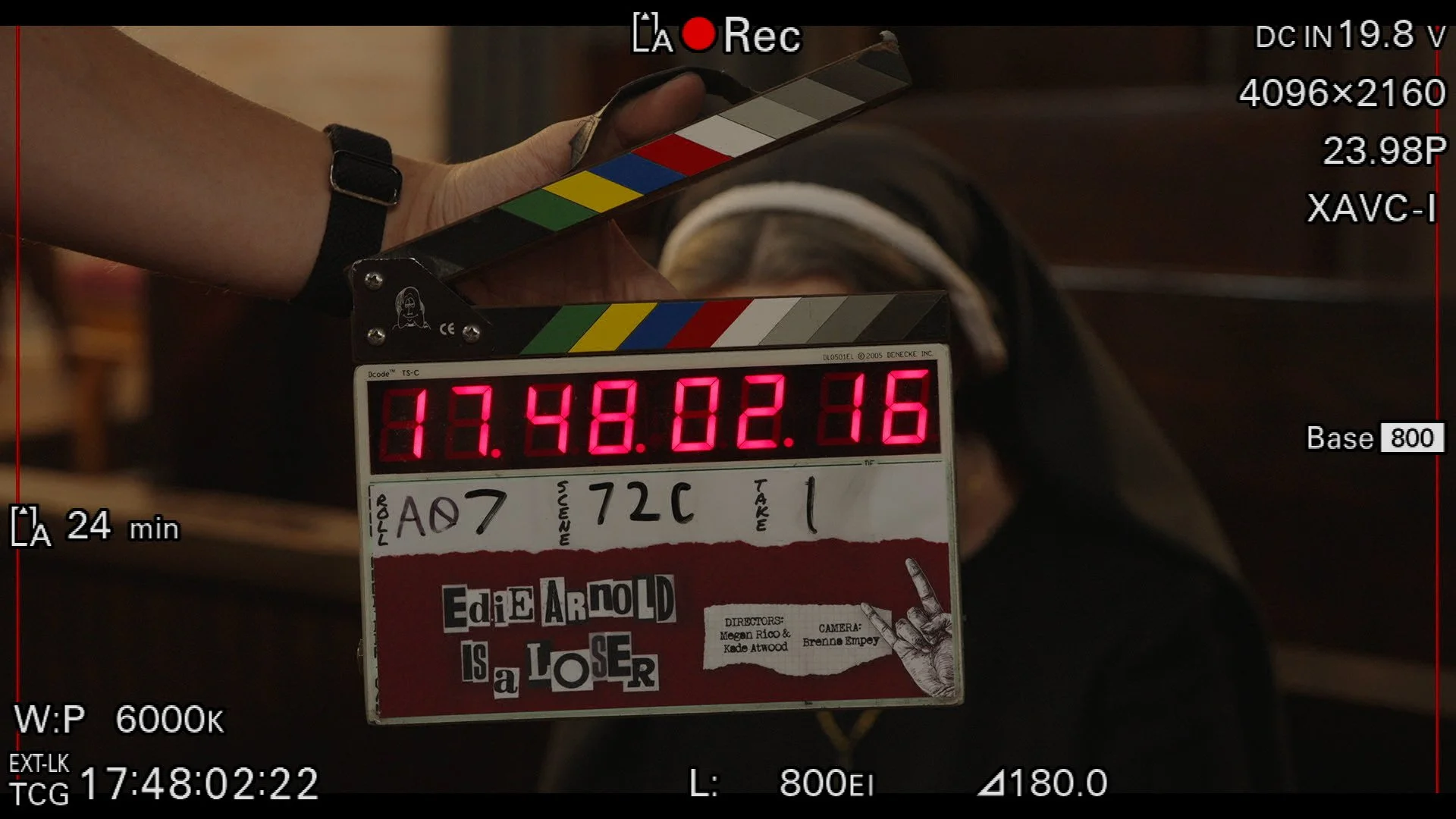
Behind the scenes of Edie Arnold Is a Loser. Courtesy of Brenna Empey and Infigo Films.
The performances, music, humor, and visual world carry the film forward without making the experience feel overly demanding. There is something refreshing about that approach. Beneath its rebellious energy and humor, the film still leaves us with questions that are easy to recognize: Who are we trying to please? What do we actually want? And how much of ourselves are we willing to change in order to fit somewhere?
There is also a genuine independent spirit behind the production itself. Rico and Atwood didn’t wait for the traditional path to open up; they found a way to make the film on their own terms, and that determination is reflected in the film’s energy and personality.
That makes Edie Arnold Is a Loser an impressive film. It is funny, energetic, thoughtfully written, and beautifully made, but it also trusts the audience enough to leave some questions open. Rather than directly spelling out its ideas about rebellion, religion, identity, and growing up, the film puts those tensions on the screen and allows us to decide what to make of them. That restraint is part of what makes the film so enjoyable, and gives it something to stay with you after the credits.
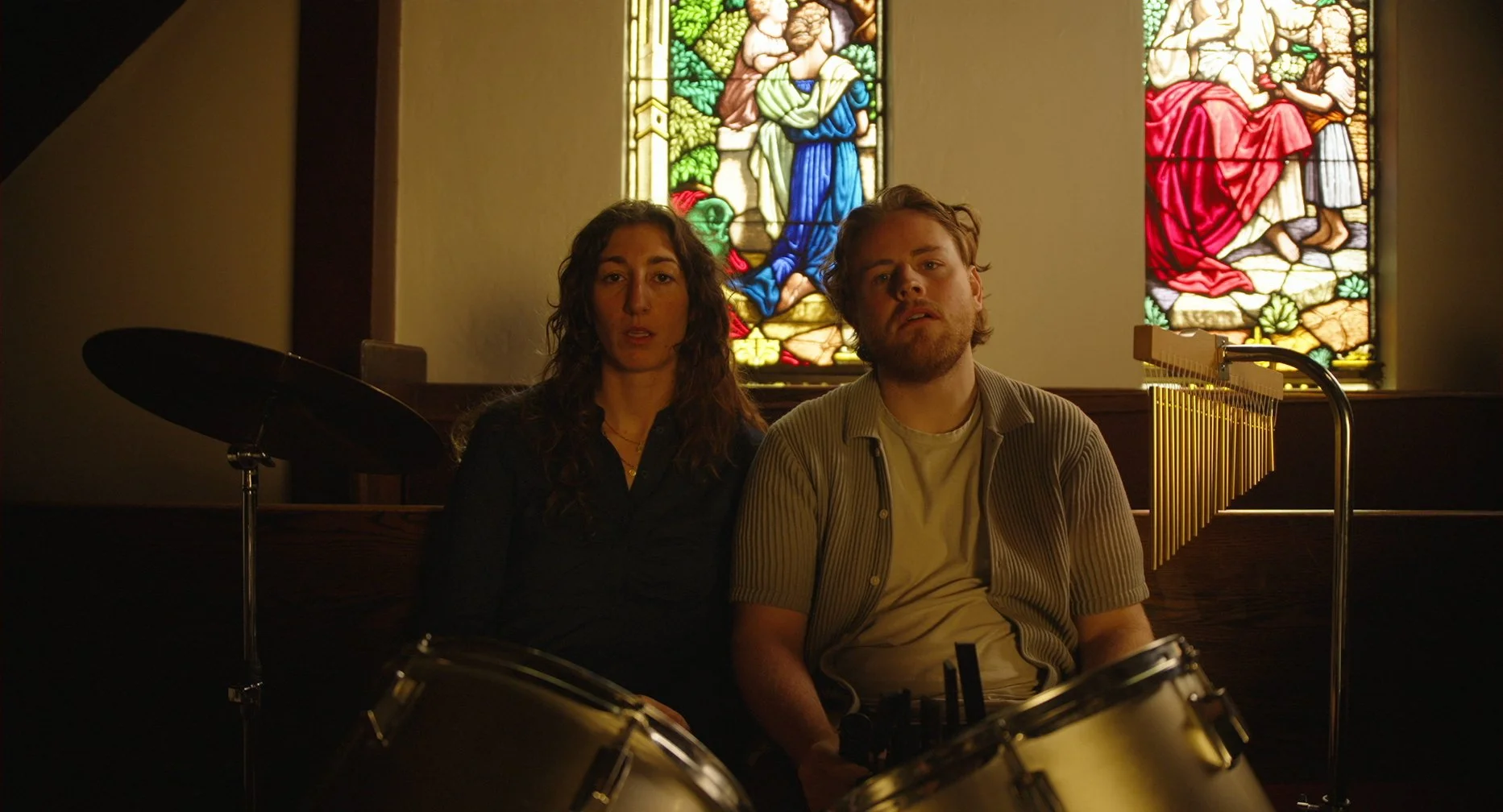
(L-R) Filmmakers Megan Rico and Kade Atwood on the set. Courtesy of Brenna Empey and Infigo Films.
“Edie Arnold Is a Loser an impressive film. It is funny, energetic, thoughtfully written, and beautifully made” — Pitch to Screen
I genuinely enjoyed watching it, and that may be the film’s greatest strength. It knows how to invite you into its world and keep you there. For audiences looking for an indie coming-of-age film with personality, strong performances, and something underneath the surface to think about, Edie Arnold Is a Loser is worth discovering.
Film Details
Title: Edie Arnold Is a Loser
Year: 2026
Country: United States
Runtime: 73 minutes
Genre: Comedy / Music / Coming-of-Age
Language: English
Directors: Megan Rico & Kade Atwood
Writer: Megan Rico
Producer: Bryson Alejandro
Cinematography: Brenna Empey
Editor: Steven Rico
Music: Nikolas Balseiro & Anand Wilder
Production: Infigo Films
Cast: Adi Madden Cabrera, McKenna Tuckett, Cherish Rodriguez, Niki Rahimi, Alexa Paige, Luseane Pasa, Star Herrmann, Alana Mei Kern, Gabe Root, Lucas Van Orden
Festival: SXSW 2026 — Narrative Feature Competition
Awards: 2026 SIFF Golden Space Needle Award — Best Film
Official Film Website: ediearnold.com
